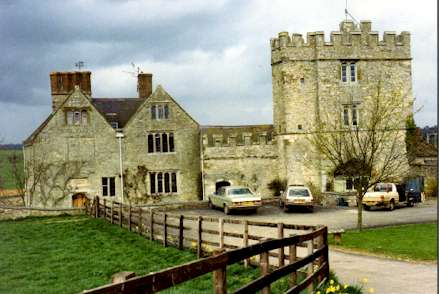
A complete list of documents held at Leicestershire Record
Office pertaining to Astwell & Falcutt. The index of manuscripts
(Nos. 558 - 836) can be found in the Collection of Ferrars and
Shirley documents at the Leceistershire Record Office, in accession
nos. 26D53, 25D60 or 22D64.
669 N.d. Temp. Eliz
Sir George Shirley's bill in Star Chamber re disturbance and
damage to his rabbit warren at Astwell (draft)
671 1 May 1563
Agreement between Francis Shirley of Staunton Harold, esq., and
Thomas Lovett of Astwell esq., in consid; of £400 and of
a marriage between John Shirley son and heir of Francis and Jane
Lovett, dau., and heiress of Thomas Lovett, that: 1. Thomas Lovett,
John Shirley and Jane his wife and John Lovett (brother of Thomas)
shall levy a fine unto William Mathew and Edmund Foster of the
manors of Astwell and Falcutt with 7 messuages, 7 tofts, 3 mills,
1 dovecot, 14 gardens, 200 acres of land, 140 acres of meadow,
500 acres of pasture, 200 acres of wood, 300 acres of furze and
heather, 10 acres of moor and 10 acres of marsh and fishing,
and £10 rent in Astwell and Falcutt by which the property
shall pass to Mathew and Foster and his heirs. 2. It is to be
held to the use of Thomas Lovett during his life. After his death
as much as is of the yearly value of £20 is to be to the
use of the same Thomas's executors for 12 years towards the ex-
cution of his will and after this the whole property is to be
to the use of any future wife or wives of Thomas and after their
death to his eldest son, then any other sons, then to the use
of John and Jane afore- said and their heirs with reversion to
heirs of Thomas. 3. If Thomas Lovett makes any leases of the
same property for not more than 99 years at the accustomed (or
greater) rents then Mathew and Foster shall be seised of the
same and the terms of leases shall stand.
673 16 April 1564
Copy of a final concord made between William Mathewe and Edmund
Foster and: Thomas Lovet, esq., John Shirley and Joan his wife,
and John Lovet, whereby: the latter parties recognise William
and Edmund's claim to the manors of Astwell and Falcutt, and
7 messuages, 7 tofts, 3 watermills, 1 windmill, 1 dovecote, 14
gardens, 200 acres of land, 140 acres of meadow, 500 acres of
pasture, 200 acres of wood, 300 acres of heath, 10 acres of moor,
10 acres of marsh and £10 rents in the same, and warrant
them in the same. Consideration not readable because document
torn.
687 1579 - 87
George Shirley of Staunton Harold's bill of complaint in Chancery
versus Edward Thorne alias Dorne re common rights in Astwell.
689 N.d. ante 1582
George Shirley of Staunton Harold's bill of complaint in Star
Chamber against William Grey and Richard Nanfan for attempting
to defraud him of the manors of Astwell and Falcutt.
690 18 Feb. 1581/2 N.B Shirley, Derbyshire
Lease from Geo.Shirley of Staunton Harold, esq., to William Greye
of Danebury (Essex) esq., and Jane his wife of the capital messuage
of Shirley, Shirley Park and Shirley mill and the miller's house,
to be held for 21 years (timber reserved).
694 28 Sept. 1582
Quitclaim from Richard Nanfan of London, gent., to George Shirley
of the provisions in an indenture of 29 June 1582 and of all
other claims to the manors of Astwell and Falcutt and to the
messuages, lands etc., of the same.
695 2 October 1582
Bargain and sale from Richard Nanfan of London gent., William
Graye of Shirley, Derbs., esq., to George Shirley of Staunton
Harold esq., in consid: of a certain sum of money, of the manors
of Astwell and Falcutt with all lands, tenements and hereditaments
belonging to the same Nanfan and Greye. Endorsement re enrolment
on Close Roll.
700 14 Jan. 1582/3
George Shirley to Francis Beaumont and Henry Beaumont, Covenant
that George Shirley shall be seized of all the manors of Astwell
and Falcutt for life, and after his death such person(s) as he
shall devise it to by will or other writing, then to his first
son and his heirs and then to 2nd son and his hairs and then
to his 3rd son and his heirs, then to heirs male of George Shirley
and then to heirs male of deceased (George's father). Proviso
that if George Shirley pay Francis and Henry Beaumont 10s at
any time during his lifetime, in the hall of his mansion house,
then this indenture shall be void. Consid: brotherly love and
affection, property to continue in Shirley family, payment of
debts and legacies of George Shirley, after his decease.
701 21 April 1584
Attested copy of a lease from Thomas Lovett of Astwell esq.,
to Geo. Shirley of Staunton Harold esq., his grandson, in consideration
of natural love and affection, of the manors of Astwell and Falcutt,
with all lands, tenements, etc., including Astwell Park, except
those already leased to John Willard and William Savage and except
all lands, tithes, etc., lately purchased from Sir George Peckham;
to be held for 99 years at annual rent of £80.
702 21 April 1584
Revocation by Thomas Lovett of Astwell of a lease of the manors
of Astwell and Falcutt made to George Shirley of Staunton Harold,
esq., of 25 March 1581/2, according to the terms of the original
lease, on the tender of 20s.
703 21 April 1584
Lease from Thomas Lovett of Astwell esq., to George Shirley of
Staunton Harold esq., his grandson, in consideration of natural
love and affection of the manors of Astwell and Falcutt, and
Astwell Park, excepting the messuages, lands. etc., leased to
John and Isabel Willarde and to William Savage and excepting
the lands recently purchased of Sir George Peckham bart., and
Mary his wife; to be held for 99 years at annual rent of £80.
704 23 April 1584
Counterpart lease from George Shirley of Staunton Harold, esq.,
to John Willard alias Wilette of Falcutt yeoman, Isabel his wife,
and George Gyfford of Astwell, gent, of the manors of Astwell
and Falcutt, except Astwell Park and certain other property already
leased to John Willarde; to be held from the death of Thomas
Lovette of Astwell esq., for 6 months at a perppercorn rent.
706 19 Sept. 1590
Grant by Geo. Shirley of Staunton Harold, esq., to Thomas Poole
of Ednaston (Derbys.,) his servant, of an annuity of £50
from a messuage in Falcutt and Astwell in the tenure of William
Warde. Proviso that if George Shirley shall tender Thomas Poole
10s during the next 5 years at Staunton Harold manor house, the
grant shall be void.
707 26 April 1592
Release by Thomas Leeson of Frankton (Warks.,) gent., and Humphry
Agarde of Long Whatton (Leics.,) yeoman to Geo. Shirley of Staunton
Harold esq., of: any right they may in virtue of lease(s) have
to a messuage called Falcutt lodge and part of 'Wormeshill',
all in Falcutt in the ternure of John Willet.
708 31 April 1592
Lease from Geo. Shirley of Staunton Harold, esq., to Thomas Leeson
of Frankton (Warks.,) of a messuage in Falcutt in the tenure
of John Willett and another messuage called Falcutt Lodge in
tenure of same, to- gether with that part of Wormshill in tenure
of same, and 1 close adjoining Falcutt Lodge, all in Falcutt,
to be held for 3 years at annual rent of £3.
709 Trinity term 1592
Sir Geo. Shirley's plea versus William Warde for damage to property
in Falcutt..
710 24 Nov. 1593
Assignment from Michael Harcourte of Leckhamstead (Bucks.,) to
Geo. Shirley of Astwell, esq., in consid: of 100 marks, of the
residue of 60 years lease of 2 messuages in Falcutt, one called
Falcutt Lodge, part of Wormeshill and a close, all in Falcutt,
formerly leased by Thomas Lovet of Astwell, esq., to John Willard,
sen., and Isabel his wife, and assigned by them to Harcourte.
711 29.Feb. 1585/6
Counterpart lease from Geo.Shirley of Staunton Harold, esq.,
to Robert Warren of Falcutt husbandman and Henry Warren, his
son, of a messuage in Falcutt, 4 yardlands and 3 closes (named);
the Lodge and its orchard being reserved to Shirley and certain
enclosed lands and timber also reserved. Lease for term of 21
years at annual rent of 46s 8d.
713 19 April 1596
Indictment of Robert Polton of Wood Burcote (Northants.) labourer
for perjury as a witness in the case between Michael Harcourte
esq., and Geo. Shirley esq., when he gave false evidence re common
rights in Astwell Park.
714 N.d c.1596-1617
Bill of complaint in Chancery of George Shirley of Staunton Harold,
esq., versus Sir William Spenser and William Lancaster re common
rights in a piece of land near Crowfield and adjoining 'Wythie
Fielde' in Astwell with Falcutt.
716 N.d. Late 16th or early 17th cent.
Jury list for George Shirley esq., versus William Lancaster for
trespass, in Astwell with Falcutt.
717 N.d. late 16th or early 17th cent.
Interrogatories in case Shirley versus Spencer. (See also last
3 items, above.)
719 N.d. post June 1597
Sir George Shirley's bill in Star Chamber against witnesses for
perjury in the case about common rights in Crowfield, in Astwell.
721 N.d. Late 16th, early 17th cent.
The demurer of Thomas Howse and others to the bill of complaint
of George Shirley esq., accusing them of perjury in the trial
between Lawned and Eagers. Common rights in Astwell involved.
722 N.D. Early 17th cent.
The Solicitor General's report following the demurrer of Thomas
Howse and others to the bill of complaint of Geo. Shirley charging
the defendant with perjury re the prescription of a common then
in dispute. He advises that they should not be proceeded against.
723 N.d. Early 17th cent.
Interrogatories to be administered on behalf of George Shirley
esq., versus Thomas Howse and others, re common rights reputed
to belong to Radstone manor in Crowfield. (Astwell with Falcutt
area) See also No. 724, below, for map.
728 N.d. Late l6th early 17th cent.
Interrogatories to be administered on behalf of George Shirley
versus Thomas Howse and others, re common rights in Crowfield
reputed to belong to Radstone manor.
731 1598 Hilary term.
Brief in George Shirley esq., versus William Lancaster re pasture
rights in Crowfield.
735 23 Aug. 1598
Counterpart agreement betw. Geo. Shirley of Staunton Harold and:
Sir Henry Poole of Sapperton (Gloucs.,) Sir Christopher Litcote
of Basildon (Berks.,) , Giles Wroughton of Broad Hinton (Wilts.,)
and Ralph Gibbes of Himington (Warks.,) esqs., in consideration
of a marriage between Geo. Shirley and Lady Dorothy Unton Widow
of Henry Unton, bart., that: 1. Geo. Shirley will levy a fine
to Sir Henry Poole etc., of the manors of Astwell and Falcutt,
and 7 messuages, 7 tofts, 3 mills, 1 dovecote, 14 gardens, 200
acres of land, 140 acres of meadow, 500 acres of pasture, 200
acres of wood, 300 acres of heath and furze, 10 acres of moor,
10 acres of marsh and fishing and £10 rents in the same,
and shall recognise that they belong to them and warrant the
same. 2. The property is to be held to the use of Geo. Shirley
and Lady Dorothy Unton, then to their heirs male, then to their
daughters to provide dowries of £1,500, then to the heirs
male of Geo. Shirley, and then to the right heirs of Geo. Shirley.
736 2. Sept. 1598
Licence from the Crown to Geo. Shirley esq., to alienate the
manors of Astwell and Falcutt and all the messuages, lands, etc.,
as enumerated in no. 735, see above, in Astwell, Falcutt, Wappenham
and Syresham, to Henry Poole, knight, Christopher Ludcote, kt.,
Giles Wroughton, esq., and Ralph Gibbes esq., to be held to the
use of George Shirley and Dorothy Unton, with detailed provision
for succession. Consid: £8 6s. 8d. Great Seal.
741 6 Oct. 1598
Final concord between Henry Poole kt., Christopher Ludcott, kt.,
Giles Wroughton esq., and Ralph Gibbs esq., and: Geo. Shirley
esq., whereby George recognises the right of the first mentioned
parties to the manors of Astwell and Falcutt and all messuages,
lands, etc., as enumerated in no.735 and above, in Astwell and
Falcutt, Wappenham and Syresham, and warrants them in the same.
Consid; £500
743 7 March 1598/99
Quitclaim from Edward Dorne of Silverstone, gent., to Geo. Shirley
of Astwell, of all claim to common rights in Astwell Park.
745 23 May 1600
Counterpart lease from Geo. Shirley of Astwell and Dame Dorothy
Unton his wife, to Henry Clifford of same, gent., of a messuage
in which Richard Scales lives, in Falcutt, and 2½ yardlands
in same, and 3 closes (described) in same, to be held for 21
years at annual rent of 33s. 4d, owing heriot of best beast.
746 1 June 1600
Counterpart lease from Geo. Shirley of Astwell esq., and Dame
Dorothy Unton his wife, to Thomas Gymes of Falcutt servant to
the same, of a messuage in which he lives in Falcutt, for 21
years if he so long live with residue to his wife as long as
unmarried, at annual rent of 40s, owing heriot of best beast,
with proviso that he shall serve Shirley as gardener.
747 15 Oct.. 1601
Counterpart lease: George Shirley of Staunton Harold esq., and
Dame Dorothy Unton his wife to Thomas Guyse of Falcutt yeoman
of a pasture ground in Falcutt called 'Wormeshill' (except wood,
etc.,) for 19 years at annual rent of £9.
748 4 Dec. 1603
Counterpart lease: Robert Earl Ferrers of Staunton Harold to
Thos. Burnell of Falcutt of a messuage and 2 yardlands on Falcutt
in tenure of same, for 20 years. Annual rent: £15
749 N.d. c. 1603 - 1617
George Shirley of Staunton Harold, esq., 's bill in Chancery
against Sir Wm Spencer for encroachments on a piece of land adjoining
Wythyfield and near Crow- field (in Astwell) through his tenant
William Lancaster and for claims on a piece of ground called
'Freebord'
752 N.d. Late l6th early 17th cent.
List of jurors in case between Roger Lawnde and George Shirley.
Also a small rough note re case.
753 10 July 1611
Counterpart lease: Sir Geo. Shirley bart., of Staunton Harold
to Thomas Gwyes of Falcutt yeoman of a piece of ground called
'New Parke' wtih the ley belonging to it, to be held for 21 years
at annual rent of £6 which is to be received by the Constable
or Thirdburrowe for certain uses.
754 20 Feb. 1611/12
Lease from Sir George Shirley bart., of Staunton Harold and Lady
Dorothy his wife to Henry Warren of Falcutt, husbandman, in consideration
of £100, of a messuage in Falcutt, 4 yardlands and 3 closes
(named) in the same, in the tenure of the said Henry (timber
only excepted) for 21 years at annual rent of 46s. 8d.
755 7 Jan. 1613/14
Counterpart lease: Sir Geo. Shirley of Astwell and Dame Dorothy
Unton his wife to: Thomas Gymes of Falcutt yeoman, servant to
the same, of a messuage with appurts., in Falcutt in which he
now lives, for term of 21 years (if he dies it is to pass to
his wife Margaret for as long as she remains unmarried) at annual
rent of 402., provided that he continues to serve as gardener.
Heriot of best beast owed.
756 3 Dec. 1616
Counterpart lease: Sir Geo. Shirley of Staunton H., to Geo. Browne
of Astwell of a close called 'Drye Feilde' in Falcutt and common
for 80 sheep in 'Crowfeild' all late in occupation of Thomas
Gwyes of Falcutt (wood and underwood reserved) at annual rent
of 6 quarters of corn and £5, to be held for 10 years.
757 1 June 1621
Counterpart lease. From Sir George Shirley of Staunton H., esq.,
and Dame Dorothy his wife, to Henry Clifford of Astwell Park,
gent., Of a pasture ground called 'Upper Ground' and a meadow
called 'The Pooles' in Astwell, in the tenure of the same, for
7 years Annual rent: £44
759 1 June 1658
Counterpart lease: Dame Katherine Shirley of Astwell, widow,
to John Clifford of same gent., of a yardland in Wappenham in
the occupation of the same, and the closes called 'Butchers Close'
'Ox Close' and the two 'Putfords', all in Astwell, for 60 years.
. Annual rent: £47
760 22 Nov. 1658
Counterpart lease: Dame Katherine Shirley of Astwell to Thomas
Pomfrett jun., of Falcutt, yeoman, of a messuage in Falcutt in
the tenure of the same, and various fields (specified) to be
held for 60 years, (if Dame Katherine lives so long) Annual rent:
£163
761 28 March 1660
Lease: Dame Katherine Shirley, widow of Sir Robert Shirley, to
Edward Gardnor of Wappenham, of 3 water- mills in Astwell with
2 closes, and a windmill in Wappenham, for 21 years. Annual rent:
£27 Attached is short inventory of implements.
762 1 April 1668
Counterpart lease: Dame Katherine Shirley of Astwell to Edward
Paradine of Slapton, miller, of 2 water- mills in Astwell with
apppurts;., and 2 closes belonging thereto, and 1 windmill in
Wappenham field with appurts;, for 21 years (if Dame Katherine
shall live so long) at annual rent of £27. Attached is
an inventory of implements.
763 1 April 1668
Counterpart lease: Dame Katherine Shirley of Astwell to Robert
Berrie sen., of Falcutt yeoman of 3 closes, called 'Stonnie Clapper'
'High Filed' and 'Humor' in Astwell and the great barn near Astwell
house and the adjoining yard and the sheep common belonging to
Astwell house, to be held for 40 years, if Dame Katherine live
so long, at annual rent of £30 for 1st year and £62
thereafter.
764 1 April 1669
Lease: John Clifford of Astwell Park to Newman Williatt senr.,
of Biddlesden (Bucks.,) yeoman and Hugh his son, in consideration
of £145, of all right concerning the depasturing, keeping
of cows and horses etc., in Astwell Park, in particular to pasturing
of 9 cows, 1 bull and 2 horses therein and all fees connected
therewith, to be held for 50 years, owing annual rent of £3
6s. 8d. to Dame Katherine Shirley of Astwell.
765 1 Feb. 1668/70
Counterpart lease: Lady Katherine Shirley of Astwell widow to
Newman Willett of Biddlesdon (Bucks.,) gent, of: Astwell Park
(with certain reservations) for 6 years, if Lady Katherine lives
so long, at annual rent of £100, 2 bucks, 2 does and 2
fawns.
766 26 Dec. 1671
Lease. Sir Robert Shirley of Staunton Harold, bart., to Sir Joseph
Sheldon of London kt., and William Pargiter of Greatworth (Northants.,)
esq., of manors of Astwell and Falcutt and all other lands adjoining
in Astwell, Falcutt, Wappenham and Syresham, (Northants.,) the
manors of Staunton Harold, Ragdale, Ratcliffe, Sileby and Willowes,
and lands and property in the above and in Thrussington (Leics.,)
and manors of Shirley, Brailsford and Ednaston with lands and
property in Ettington, Oxhill, Fulready and Whatcote, (Warks.,)
and the manor of Sutton Bonington with all lands and property
there (Notts.,) for term of 1 year. Consid: 5s. Peppercorn rent.
767 1 May 1673
Counterpart lease: Sir Robert Shirley of Staunton Harold, bart.,
to Anthony Buckingham of St. Andrew's mill in Kingsthorpe miller,
of two mills in Astwell called Lowes mill and Margaret's mill,
with their appurts., and 2 closes, and 1 windmill in Wappenham
with appurts., for term of 11 years at annual rent of £27.
Attached is inventory of implements.
768 1 May 1673
Counterpart lease: Sir Robert Shirley of Astwell to Thomas Pomfrett
of Falcutt yeoman of a messuage in Falcutt in which he lives
and various (specified) lands, for 21 years at annual rent of
£159 for first year, £177 for second year and £219
thereafter.
769 18 July 1673
Lease: Sir Robert Shirley of Astwell to Henry Saunders of Falcutt
yeoman of a messuage and various lands (specified) in Astwell
and Falcutt for 21 years at annual rent of £101.
770 19 July 1673
Counterpart lease: Sir Robert Shirley of Staunton Harold to Numan
Williat of Biddlesdon (Bucks.,) gent., and Numan Williatt jun.,
his son, of: Astwell Park (with certain reservations), to be
held for 21 years at annual rent of £100 and 2 bucks, 2
does, and 2 fawns.
771 24 June 1674
Counterpart lease: Sir Robert Shirley of Staunton Harold bart.,
to Joseph King of Falcutt, yeoman, of a messuage in Falcutt in
the occupation of Robert Bury with various lands and closes (specified),
to be held for 10 years. Annual rent of £160 for 1st year,
£200 for 2nd and 3rd years, and £220 for subsequent
years.
772 1 May 1677
Lease: Sir Robert Shirley of Staunton Harold, to: Thomas Pomfrett
of Falcutt, gent., of 'Oxe Close' in Astwell and a yardland in
Wappenham in the common field in the tenure of John Clifford,
with all appurts;, to be held for 17 years at annual rent of
£13.
773 1 May 1677
Lease from Sir Robert Shirley of Staunton Harold to Thomas Pomfrett
of Facutt gent., of a close called 'Oxe Close' in Astwell and
1 yardland of ground in Wappenham with their apppurts., for 17
years at annual rent of £13.
774 11 May 1677
Lease: Sir Robt.Shirley of Staunton H., to John Whitton of Helmdon
husbandman of: a messuage in Falcutt in the occupation of Henry
Saunders and 2 yardlands belonging to the same, and closes called
'Hewmore' and 'Five Acres' and common rights in 'Crowfield',
all in the same, for 10 years, at an annual rent of £54.
775 11 May 1677
Counterpart lease: Sir Robt. Shirley of Staunton H., to Richard
Clarke of Hemdon husbandman of: the closes called 'Seaven Acres'
and' Wythyfeild' and another little close, for 10 years at annual
rent of £25.
776 13 Nov. 1679
Receipt from William Roberts, Receiver, to Hon. Robert Lord Ferrers
for 22s. 10d rent due to the king for Astwell manor
777a. 1 May 1684
Counterpart lease: Robert Lord Ferrers of Staunton Harold to
Anthony Buckingham of Astwell, miller, of: 2 watermills in Astwell
with their apppurts., and 2 closes belonging thereto, and 1 windmill
in Wappenham with appurts., for 11 years at annual rent of £27.
Attached is an inventory of implements.
777b. 1 May 1684
Bond in £100 of Anthony Buckingham of Astwell, miller,
John Coleman of Greens Norton (Northants.,) miller, and Martin
Haycocke of Weedon Lois (N'hants.,), miller, to: Robert Lord
Ferrers of Staunton Harold to observe the conditions of an indenture
of even date. (see above, no 777.a.)
778 7 June 1684
Counterpart lease: Robert Lord Ferrers of Staunton Harold to:
Daniel Whitton of Helmdon, yeoman, of: Helmdon Close and the
Long Meadow in Falcutt, for 7 years at annual rent of £43.
779 7 June 1684
Counterpart lease: Robert Ferrers of Staunton Harold to Edward
Herriott of Helmdon, yeoman, of: Helmdon Close' and 'Broad Meadow'
in Falcutt, of 7 years at annual rent of £64.
780 June 1684
Counterpart lease: Robert Ferrers of Staunton H., to John Blood
of Astwell yeoman of: a messuage in Falcutt in tenure of Joseph
King and various specified fields, to be held for 7 years, at
annual rent of £79.
781 7 June 1684
Counterpart lease: Robert Lord Ferrers of Staunton H., to Richard
Pettefer of Helmdon, yeoman, of: 'Church Leyes' 'Chappell Closes'
and 'Eaneing Closes' in Falcutt, for 7 years at annual rent of
£34.
782 25 Feb. 1692
Counterpart lease: Robert Lord Ferrers of Staunton H., to Richard
Cockerill of Wappenham butcher, of 'Brookfeild' 'Pullfords' and
'Officers' closes, all in Astwell, and late in tenure of John
Blood, for 21 years at annual rent of £40.
783 25 Feb. 1692/3
Lease: Robert Lord Ferrers to John Buswell of Astwell miller,
of 2 watermills in Astwell with appurts., and 2 closes belonging
thereto, with certain rights in the 'Old Brooke' and one windmill
with appurts., in Wappenham for 21 years, at annual rent of £27.
Attached is an inventory of implements.
784 25 Feb. 1692/3
Lease: Robert Lord Ferrers of Staunton H. to John Jennings of
Astwell yeoman, of a messuage called Astwell House with 'Bowling
Leys' the 'Oate Close' and ' Connygreane Close' all in Astwell,
for 21 years, at annual rent of £69.
788 2 Nov. 1693
Counterpart lease: Robert Lord Ferrers of Staunton H., to John
Jennings Astwell, yeoman, of 'Stony Clappers' 'Hughmoor' 'Bushy
Ground' 'Highfeild' and 'Abbots Meadow', all in or nearAstwell
and in the tenure of Thomas Pomfrett. For 20 years at annual
rent of £103.
789 4 Dec. 1693
Lease: Hon . Robert Lord Ferrars of Staunton H., to Thomas Burnell
and James Baileys of Falcutt, yeoman, of the closes called ;'Wythyfeild',
'Great Seven Acres', and 'Little Seven Acres', in Falcutt for
20 years, at annual rent of £26.
790 4 Dec. 1693
Counterpart lease: Robert Lord Ferrers of Stasunton H., to William
Whitten of Falcutt, yeoman of a messuage in Falcutt now in the
tenure of Thomas Pomfret and a cottage in Falcutt in the tenure
of Elisabeth Pomfrett and various (specified) closes, for 20
years at an annual rent of £136.
791 4 Dec. 1693
Counterpart lease: Robert Lord Ferrers of Staunton H., to John
Blood of Falcutt yeoman of a messuage, 2 yardlands and 'Dryfeild,
' Hughmoor', 'Hughmoor Meadow', 'Five Acres', fields all in and
around Falcutt, in the tenure of William Whitten, for 20 years
at annual rent of £54.
792 4 Dec. 1693
Lease from Robert Lord Ferrers of Staunton H., to Thos. Burnell
of Falcutt, of a messuage, 2 yardlands in Falcutt, in the tenure
of the same, for 20 years, at annual rent of £15.
796 2 June 1695
Counterpart lease: Hon. Robert Shirley of Chartley to Thomas
Paine of Syresham, husbandman, of 'Kenbles Corner' (a close)
in Astwell Park, for 20 years at annual rent of £18.
797 2 June 1695
Lease: Hon. Robert Shirley of Chartley, etc., to Henry Flowers
of Syresham, yeoman, of 'Barecoppice Close' in Astwell Park for
20 years at annual rent of £15.
798 2 June 1695
Counterpart lease: Hon. Robert Shirley of Chartley, Staffs.,
esq., to William Baileys of Falcutt yeoman of 'Padockes Close'
in Astwell Park with a cottage standing thereon, for 20 years
at annual rent of £30.
799 June 1695
Bond in £100 of William Baileys of Falcutt to Hon., Robert
Shirley of Chartley to observe covenants of an indenture of even
date.
800 2 June 1695
Counterpart lease from Hon. Robert Shirley of Chartley, esq.,
to Abraham Perkins of Astwell, labourer, of 'Ram' close in Astwell
with a cottage thereon, for 20 years at annual rent of £10.
802 a & b 10 and 11 June 1715
Conveyance by means of lease and release from: Washington Shirley
esq., called Viscount Tamworth, to: Richard Levenige of Parwick
(Derbys.,) esq., and John Coates of Woodcote (Salop.) esq., in
consideration of affection for his wife and children and of 5s
received from Levenige and Coates, of the manors of Astwell and
Falcutt and all lands, tenements (including the mansion house)
in Astwell, Falcutt, Wappenham and Syresham to be held on trust
to the following uses: To Washington Shirley himself for life,
and then for the next 500 years to the son(s) of Washington and
Mary his wife and their heirs male, all in seniority, then to
the brothers of Washington and their heirs male, also in seniority,
with reversion to the right heirs of Robert Earl Ferrers, with
the limitation that if Mary Shirley survives Washington she is
to occupy Astwell mansion house, rent free while remaining unmarried
and to receive an annuity of £600 (provision also made
for a future wife if Mary predeceases him.). The trustees may
dispose of the property by means of lease, sale and mortgage
to raise sum(s) not exceeding £20,000 to the following
uses: Sum(s) not exceeding £6000 to Washington himself:
sum(s) not exceeding £12,000 as portions for younger children,
a sum of £2,.000 to Mary on widowhood. If Mary and her
children predecease Washington, the sums of £12,000 and
£2,000 are payable to him.
804 4 March 1722/23
Attested copy of a mortgage in £4,000 and 5% interest from
Washington Earl Ferrers to Amy Castleton widow of Nathaniel Castleton,
secured on Astwell and Falcutt manors.
805 3 June 1728
Copy of deed of Washington Earl Ferrers to Theophilus Earl of
Huntingdon for securing the further sum of £5000, part
of the marriage portion of Selina Shirley concerning the third
part of estates in Derby, Leics., Northants., Notts., and Warwicks.,
809 & 810 a 5 March 1739/40
Counterpart of assignment by way of mortgage from Viscount Kilmorey
and Mary his wife (one of dau. of Washington Earl Ferrers) with
consent of Lawrence Shirley the elder of Staunton Harold, to
Christian Fred., Zincke of Covent Garden, of sum of £5000
due to them and charged upon estate in Leics., Derby., Warks.,
Notts., and N'hants.,; to secure £5000. Same date. Deed
of covenant of Lawrence Shirley to Zincke for the payment of
£5000 in same indenture upon certain dates. Endorsed: "1"
811 & 812 18 Dec. 1740
Assignment by Jos. Gascoigne Nightingale, by direction of Lawrence
Shirley, to Christian Fred. Zincke of sum of £2251 10s
6d - remainder of £5000 charged upon the estates in Derby.,
Leics., Warks., Notts., and N'hants., to secure to Theophilus,
Earl of Huntingdon, a like sum. 18 Dec. 1740 Covenant by Lawrence
Shirley to Zincke for the repayment of the mortgage sum from
the manors comcerned. Endorsed "7".
813 18 Dec. 1740
Counterpart deed of covenant of Lawrence Shirley to Christian
Fred. Zincke for repayment of £2251 10s 6d advanced to
Theophilus Earl of Huntingdon upon mortgage of similar sum, being
part of £5000 due to Lady Eliz. Nightingale and charged
on Ferrers estates in Leics., Derbys., Warks., Notts;, and Northants.,
814 18 Dec. 1740
Counterpart of assignment by way of mortgage from Jos. Gascoigne
Nightingale, with consent of Lawrence Shirley, to Christian Fred.
Zincke of £2251 10s. 6d. being remainder of £5000
charged upon estates in Leics., Derbys., Warks., Notts., and
Northants., and due to Lady Eliz. Nightingale, to secure to Theophilus
Earl of Huntingdon the sum of £2251 10s. 6d.
816 21 Nov. 1745
Lease: Lawrence Earl Ferrers to Richard Phillips of New Inn (Middlesex)
in consideration of 5s. of the manors of Astwell and Falcutt
with all lands, messuages etc., etc., to be held for 1 year,
at a peppercorn rent.
817 22 Nov. 1745
Attested copy of a deed to lead the uses of a recovery, whereby
Lawrence, Earl Ferrers grants the manors of Astwell and Falcutt
with all lands, messuages, etc., to Richard Phillips of New Inn
gent., to the intent that they may be recovered to George Sherwood
of New Inn gent., to the use of the said Earl.
819 19 Jun. 1749/50
Attested copy of a lease from Lawrence Earl Ferrers to John Dashwood
King of Halton (Bucks.,) esq., and James Winstanley of Braunstone
(Leics.,) esq., in consideration of 5s, of the manors of Astwell
and Falcutt and all other manors, lands, tenements, etc., in
Astwell, Falcutt, Wappenham and Syresham, to be held for 1 year
at a peppercorn rent.
820 20 Jan 1749/50
Attested copy of a deed of trust for Astwell and Falcutt manors,
subsequent to a Chancery award about the property and previous
mortgages and trusts, securing them to Lawrence, Earl Ferrers
and his descendants through John Dashwood King and James Winstanley
as trustees.
821 22 Jan. 1749/50
Attested copy of lease for a year from Laurence Earl Ferrers
to Thomas Goostrey of Westminster, gent., in consideration of
5s, of the manors of Astwell and Falcutt with all messuages,
lands, etc., in Astwell, Falcutt, Wappenham and Syresham.
822 23 Jan. 1749/50
Attested copy of a deed to lead the uses of a recovery whereby
Laurence Earl Ferrers grants to Thomas Goostrey of Westminster,
gent., the manors of Astwell and Falcutt, with all lands, messuages,
etc., to the intent that they may be recovered to Richard Balshaw
of Westminster to the use of the said Earl.
824 17 April 1760
Counterpart mortgage (by means of release) in £1548 and
interest by Frederick Campbell of the Middle Temple and Theophilus
Meredith of St. Margaret's Westminster (appointed trustees by
Parliament for the raising of money to cover the expenses of
the separation of Mary Countess Ferrers from the Earl, her husband)
on a 500 lease of the manor of Astwell and Falcutt and messuages,
lands and tenaments in Wappenham and Syresham, to Samuel Wright
of Knutsford
825 23 April 1750
Declaration by Charlotte Digby of trust in mortgaged estates
of Earl Ferrers in Northants., according to Chancery order of
16 Jan. last: to hold same after payment of £4000 to Amy
Castleton, in trust for Earl Ferrers to raise £6000.
826 16 May 1750
Declaration of trust by Christian Fred. Zincke to Laurence, Earl
Ferrers to hold manors in Northants., security for mortgage loan
of £2251 10s. 6d. after payment of same, in trust, according
to terms of Chancery of 16 Jan. last.
827 31 May 1763
Counterpart mortgage in £4,000 and interest from Washington,
Earl Ferrers Viscount Tamworth to Edward Holden Cruttenden of
Middlesex, esq., on a 500 year lease of Astwell and Falcutt manors
with lands, messuage, etc., therein, paying a peppercorn rent
828 26 Aug. 1763
Counterpart mortgage by way of release in £14,000 and interest
from Washington Earl Ferrers, Viscount Tamworth to Edward Holden
Cruttenden of Middlesex esq., of the manor of Astwell and Falcutt,
with lands and messuages etc., (specified) in the same.
829 29 Sept. 1764
Counterpart mortgage in £3000 and interest from Washington,
Earl Ferrers, to John Stevenson of London, warehouseman, on the
manors of Astwell and Falcutt with certain lands, messuages,
etc., (specified).
830 21 Feb. 1767
Mortgage (by means of release) from Washington, Earl Ferrers
to Thomas Parker of the Inner Temple in £2807 at 5% interest,
on the manors of Astwell and Falcutt and all manors, messuages,
lands etc., in Wappenham and elsewhere in Northants.,
831 1767
Unexecuted lease from Washington, Earl Ferrers to Rev. Porter
Bringloe of the manors of Astwell and Falcutt with all lands
and appurts., to be held for one year at a peppercorn rent. Consid:
5s.
832 1767
Unexecuted mortgage, by way of release, in £500 and interest,
from Washington, Earl Ferrers to Rev. Porter Bringloe, on the
manors of Astwell and Falcutt.
833 14 March 1768
Bill of complaint of John Stevenson of London, warehouseman,
in Chancery, versus Washington, Earl Ferrers, re a mortgage on
manors of Astwell and Falcutt.
834 9 Nov. 1770
Counterpart lease: Washington, Earl Ferrers to Wm. Brown of Spratton
(N'hants.,) yeoman of Astwell Park House, with various (specified)
closes for 7 years, at an annual rent of £259 12s. 11½d.
835 5 March 1774
Counterpart mortgage in £9,384 and interest from Washington,
Earl Ferrers to John Webster of Derby, gent., on a 2,000 year
lease of the manors of Astwell and Falcutt with specified lands
and messuages in Wappenham and Syresham, held at peppercorn rent.
836 29 Dec. (year not given, probably late 17th cent.)
Lease from Robert Lord Ferrers of Staunton Harold,, guardian
to Hon. Robert Shirley an infant, to James Baylis of Falcutt,
of 'Wormshill' close and 'Wormshill' meadow, both in Falcutt,
for 6 years, at annual rent of £25.


 Shirleys
of Astwell
Shirleys
of Astwell